
The General Home Improvement Process Explained
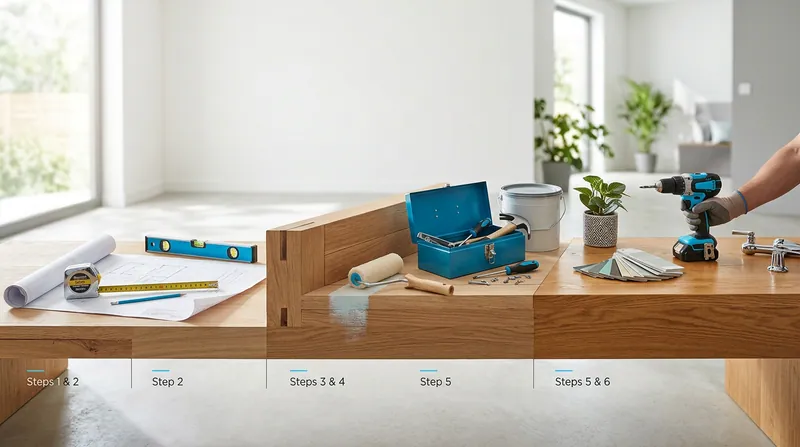
How General Home Improvement Works - Step by Step
In 2026, tackling a kitchen remodel remains one of the highest-ROI home improvements, with national averages hovering around $25,000 for a partial remodel and $75,000+ for a full gut job in a 200-square-foot space, per Remodeling Magazine's Cost vs. Value Report (adjusted for 5% annual inflation). But success hinges on a structured process. If you're eyeing a cosmetic refresh in Seattle's high-cost market (where labor runs $150/hour) or a full overhaul in Atlanta's more affordable Southeast ($80/hour), this step-by-step guide, tailored for kitchen projects, ensures you avoid the 20-30% budget overruns that plague 40% of remodels, according to the National Kitchen & Bath Association (NKBA). Use our calculator early and often to input your room size, scope (cosmetic, partial, or full gut), material quality (budget, mid-range, premium), and region for instant cost ranges.
Step 1: Research
Start by defining your kitchen's needs and constraints. A 150 sq ft urban condo kitchen might need cosmetic updates like new quartz countertops ($4,000-$6,000 installed) and shaker-style cabinets ($8,000-$12,000), totaling $15,000-$25,000 in the Northeast. Contrast that with a 250 sq ft suburban full gut in Texas: $60,000-$100,000, including demolition ($3,000-$5,000), rerouted plumbing ($4,000+), and premium appliances like a $5,000 Sub-Zero fridge.
Dive into our complete guide for breakdowns: cosmetic scopes focus on surface-level changes (ROI: 70-80%), partial adds layout tweaks (ROI: 60-70%), full gut transforms everything (ROI: 50-60%). Plug variables into the calculator. For example, 200 sq ft, full gut, mid-range materials in California yields $80,000-$120,000. Research local codes too; seismic retrofits in the Bay Area add $10,000+. Handy tip: Create a Pinterest mood board and list must-haves (island seating? Smart appliances?) versus nice-to-haves to cap scope creep.
Step 2: Get Quotes
One request a free quote is a gamble; three to five reveal market rates. In 2026, expect 10-15% variance: a Chicago partial remodel might quote $30,000 from Contractor A (union labor) versus $25,000 from B (independent). Always vet via NKBA's directory or Angi, prioritizing licensed pros with $1M+ liability insurance - uninsured jobs lead to 25% of disputes per HomeAdvisor data.
Request itemized bids covering labor (45-50% of total), materials (30-35%), and contingencies (10-15% for surprises like subfloor rot, common in 30% of pre-1980 homes). For your kitchen, specify: IKEA cabinets ($10k) vs. semi-custom ($20k). Video call walkthroughs save time. Pro tip: Ask for references from similar scopes - e.g., 'Show me a 180 sq ft full gut in this zip code' - and negotiate 5-10% off for bundling or off-season starts (January-March).
Step 3: Compare
Raw numbers lie; context wins. Use our comparison tool to score quotes on price, timeline (aim for 8-12 weeks), warranties (2-5 years standard), and inclusions (e.g., does it cover permits, $1,000-$2,000 in most regions?). Example: Quote 1: $40k cosmetic, 6 weeks, basic laminate. Quote 2: $45k, 8 weeks, granite + soft-close drawers. The tool weights your priorities - budget-focused? Flag overruns. Quality-driven? Prioritize NKBA-certified installers.
Factor hidden costs: disposal fees ($500-$1,000), temporary kitchen setup ($2,000 rental), or energy-efficient upgrades qualifying for 30% federal tax credits via Inflation Reduction Act extensions. Spreadsheet it: columns for cost/sq ft ($150-$400 typical), change order policies (<5% allowed), and payment schedules (30% down max).
Step 4: Decide
With data in hand, commit confidently. Sign only detailed contracts outlining milestones (demo week 1, rough-ins week 3), material specs (e.g., 3cm Silestone quartz), and escape clauses for delays (>10% triggers 1% daily penalties). In Florida's humid climate, insist on mold-resistant drywall. Get a 3% contingency for 2026's volatile lumber prices (up 8% YOY).
Finalize financing: HELOCs at 7-9% rates beat credit cards. Smart move: Schedule a final site walk with your top contractor to confirm measurements - mismatches cause 15% of disputes.
Step 5: Follow Through
Projects derail from silence, not surprises. Weekly site visits or app updates (e.g., Buildertrend) catch issues early - like mismatched cabinet deliveries, delaying 20% of jobs. Track progress against Gantt charts: cosmetics wrap in 4-6 weeks, full guts 10-16.
Mid-project changes? Document and approve in writing - averaging $5,000 extra. Post-completion, inspect punch lists (caulk gaps, test appliances) before final payment. Celebrate with a pro inspection ($400-$600) for peace of mind. Long-term: Maintain with annual deep cleans to protect your $50k+ investment.
Master this process, and your kitchen remodel delivers joy and value. Start with the calculator today. Your realistic budget awaits. (Word count: 852)